Save water even when it rains - Cape Town’s dam levels 47,7%
01 May 2026
Team Cape Town, let’s continue to save water even though recent rains increased dam levels by 2,4% since last week. Saving water helps keep Cape Town’s dams fuller for longer. We need to make sure the water in our dams can last until next year, as we cannot depend on unpredictable rainfall this winter and want to avoid early water restrictions as much as possible.
Consumption statistics confirm that currently, 70% of water being used in high volumes is at home. Residents are key to changing this trajectory,
here are the top water saving tips.
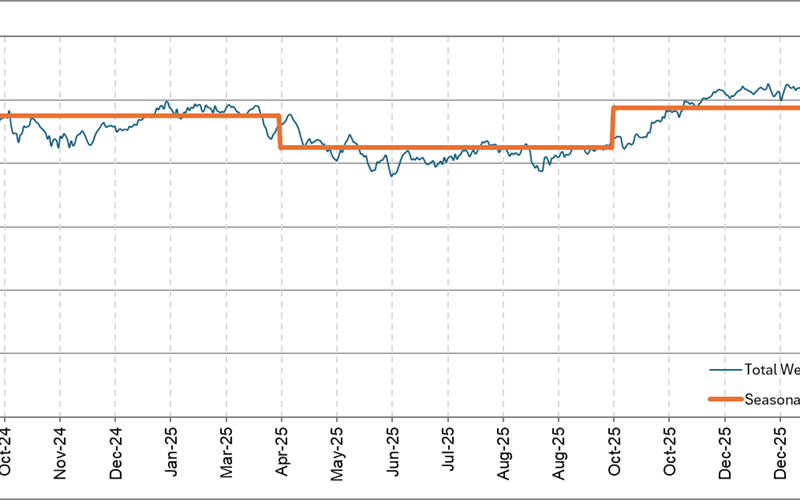
The water usage graph (below) also indicates that consumption remained higher this past summer compared to the previous year.
Did you know?
Water tariffs are structured to reward lower consumption and encourage saving.
Currently residents pay on average between 5c - 8c a litre for Cape Town tap water.
Water for domestic use is billed on a sliding scale, meaning the more you use, the higher the cost per kilolitre (1,000 litres) per month. Current Domestic Full Non Indigent tariffs (including VAT) are:
- R24.32 for the first 6 kl
- R33.42 for usage between 6 and 10.5 kl
- R49.96 for usage between 10.5 and 35 kl
- R96.37 for usage above 35 kl
By using less water, you can stay in the lower tariff bands and significantly reduce your monthly bill. Check your municipal account to see which tariff bands (steps) apply to your current consumption.
Current dam levels and how much water Cape Town has used
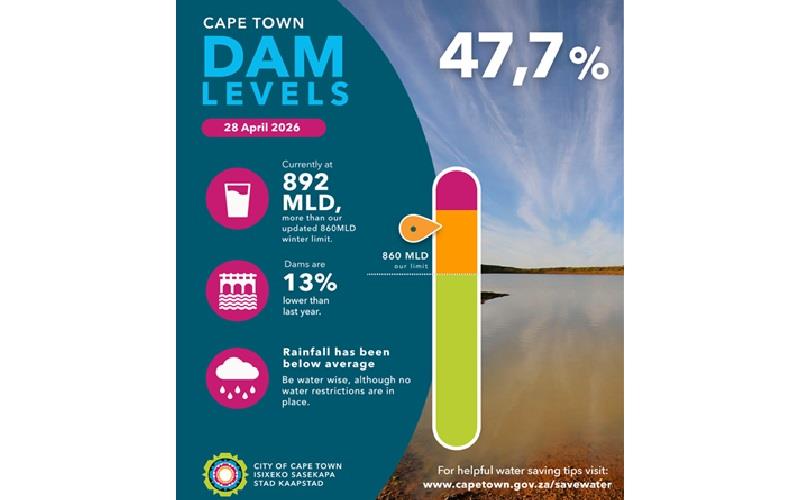
Over the past week, water usage has increased to 892 million litres of water a day (MLD) from 859 MLD last week.
This is 32 MLD above the new winter usage target of 860 MLD.
Cape Town’s dam storage levels currently stand at 47,7%.
Cape Town’s water status in a nutshell:
• Everyone living, working and visiting Cape Town needs to be water wise, especially in May so we have more water stored ahead of the uncertain winter rainfall, which is predicted to be less than average.
• Cape Town is not in a drought, and not heading to ‘Day Zero’. However, Cape Town is in the early warning phase that reflects lower-than-expected dam levels and signals the need for continued careful use of water. The window to avoid water restrictions before November is narrowing as our collective usage remains high.
• The City may, based on its own assessments of water usage, dam levels and long-term weather forecasts, propose water restrictions before the next Annual Operating Analysis that is done by the National Department of Water and Sanitation (DWS) in November. The City is and will continue to closely monitor dam levels and water use closely.
Team Cape Town, let’s continue to save water together
‘The recent rain has been a blessing as our dam levels have increased by 2,4% but we cannot take this for granted. Let’s continue to save water even when it rains. Saving water keeps our dam fuller for longer and it saves residents money because the less water you use, the less you pay.
‘We cannot depend on unpredictable rainfall to fill our dams. While rainfall is vital, it also has to rain in the right place, in our dam catchments for dam levels to increase.
‘Team Cape Town, we all use water every day so we all need to do so wisely and responsibly in and around our homes, businesses and industries, and for essential purposes only. Every drop counts ahead of unpredictable winter rainfall,’ said Councillor Zahid Badroodien, Mayoral Committee Member for Water and Sanitation.
Reminder:
Report burst municipal pipes immediately to the City through formal channels.
There are various ways to report a leak or a pipe burst:
Please provide an exact location or address and always insist on a reference number.
Information:
See
the City’s action plan to be water-wise and build Cape Town’s water secure future.
Caption 1: The graph shows Cape Town’s water usage in relation to the target.
Caption 2: Dam levels update infographic
Published by:
City of Cape Town, Media Office